
Written by Nicklas Albertsson

The first thing that comes to people’s minds when they hear the word arctic is rarely plants. Other aspects of the Arctic are often the primary association, such as ice, snow, polar bears, melting glaciers, and northern lights. You might be thinking, does the Arctic even have plants? The answer is a resounding yes, just on Greenland alone there are around 500 species of plants!
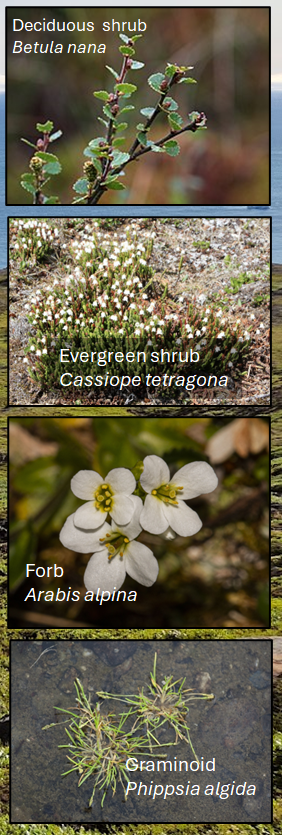
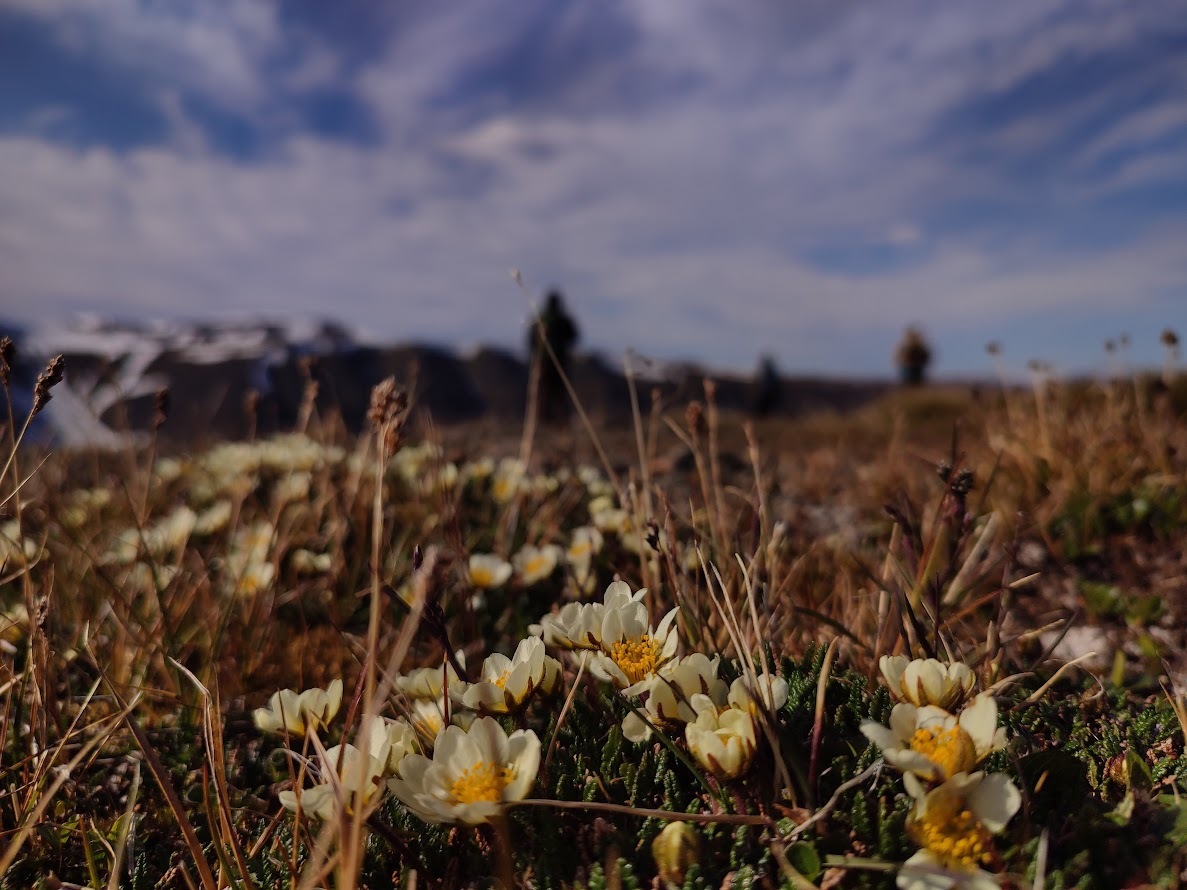
The Arctic is the northernmost region in the world. Vast and varied with an annually melting and freezing ocean, landmasses covered with glaciers, and permanently frozen soil. But there are also things that are not frozen. The short summers have pleasantly warm periods with temperatures up to 15-20 °C, especially in areas situated at lower elevations. These lowland areas with summer-thawed soil are home to the majority of arctic plants. Here, we find small, low-stature plants such as the evergreen shrub Cassiope tetragona or the small tussock-growing graminoid Phippsia algida.
Arctic plants might affect your future!
The Arctic is warming fast with climate change, potentially releasing large amounts of trapped carbon in the soil.
Arctic vegetation is also changing and plays an important role in the carbon cycle. Taller plants result in more accumulated snow during winter leading to warmer soil due to insulation. In contrast, more vegetation cover or a different composition of plants can lead to cooling of the soil in summer due to shading. These are two examples exemplifying the complex interplay between the atmosphere, vegetation, and soil. We need to understand the vegetation shift going on right now in the Arctic, and with that, we can improve our future predictions of the impacts of climate change.
Arctic plants and temperature: do spatial relationships predict change over time?
Since the plant cover consists of so many species it can be hard to draw conclusions from measuring temperature and connect that to each specific plant species. Instead, we categorize the plants into groups that share similar functions and form, functional groups. The four different groups used here are shown in the pictures. My research has concluded that, spatially in the landscape, the air summer temperature describes the relative abundance of these functional groups across three arctic sites. In the most southern site, Latnjajaure in Sweden, summer air temperature also describes the relative abundance over time. In the two more northern sites, Greenland and Svalbard, there is no relative abundance change with time. Those two sites are part of the high Arctic, perhaps one of the most extreme ecosystems on earth when it comes to annual variation in temperature, even if we don’t take climate change into consideration. It might be that the plant communities there are inherently resilient to changing temperatures. Or maybe enough time hasn’t passed yet. We also need to consider that more things than temperature are changing with climate change, such as snow cover and soil moisture, those factors may also affect the plants. The full story of how arctic plants will respond to climate change is still not uncovered, but since we humans are causing it, it is also our responsibility to reveal the impacts it will have. With that knowledge, my hope is that we can, as a civilization, embrace collective decisions that will shape a better future for us and ecosystems alike.
 EDGE LAB