
Fieldwork in the Arctic is amazing but can be extremely challenging. From swarms of bugs to biting cold, you need a combination of the right gear, clever improvisation, and some key creature comforts to stay effective and sane. Here are our top life hacks for a more enjoyable and productive Arctic research experience.

1. Invest in a proper mesh hat: Your personal forcefield against flying fiends
In some of our field sites the biggest enemy are mosquitoes and horse-flies. Karin has discovered the magic of a proper mesh hat. It’s breathable, lightweight, and most importantly, a barrier that lets you relax without constantly swatting at your face. This investment transformed her experience from “bugged out” to blissful. Trust her—get one!
2. Sleep soundly: The miracle of earplugs and warm water bottles
Nothing ruins a good night’s rest like the high-pitched whine of a mosquito circling your ear. Solution? Earplugs. They’re a lifesaver, blocking out not just the mosquitos but also the ambient noise of a windy tent flapping (or your snoring co-worker). Freezing during the nights? A hot water bottle does wonders. Start packing these and you’ll wake up ready to tackle the day’s tasks, not groggy from a sleepless cold night.

3. Chocolate: the ultimate morale booster
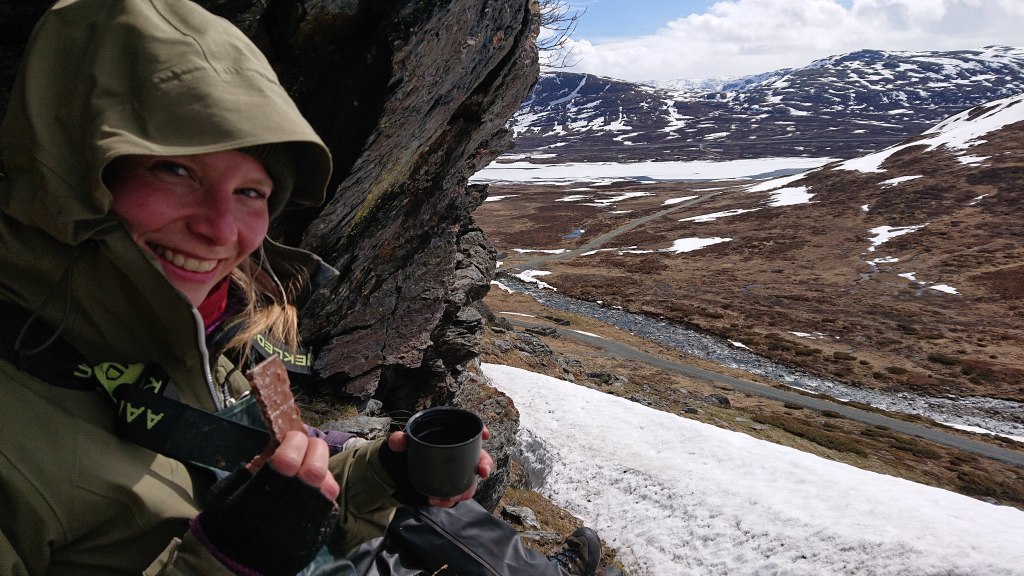
Bad weather? Spirits low? Chocolate to the rescue. It’s the perfect pick-me-up to keep morale high when the Arctic winds are howling or the rain just won’t quit.
Whether it’s a shared treat with your team or a secret stash for solo moments, chocolate is essential. Our life hack: small thermos of hot cocoa, it’s such a nice pick-me-up in the afternoon when you are tired and cold!
4. Pocket essentials: Sharpie & swiss army knife
In the Arctic, you need tools at your fingertips. A Sharpie pen can be used on all kinds of material and is waterproof. Our life hack: mark it with flagging tape to find it again during field work. And a Swiss Army knife? That’s your multi-purpose tool. From cutting cords to fixing equipment, it’s indispensable. Keep these in your pocket at all times—you’ll thank yourself later. And to have those available you need…
5. Cargo pants = snack and tool storage central
Fieldwork burns calories—lots of them. Enter cargo pants, with their multitude of deep pockets, perfect for storing snacks and all your pocket essentials (sharpie, swiss army knife…). Keep high-energy bites like nuts, granola bars, or jerky within arm’s reach.
6. Improvise like a pro
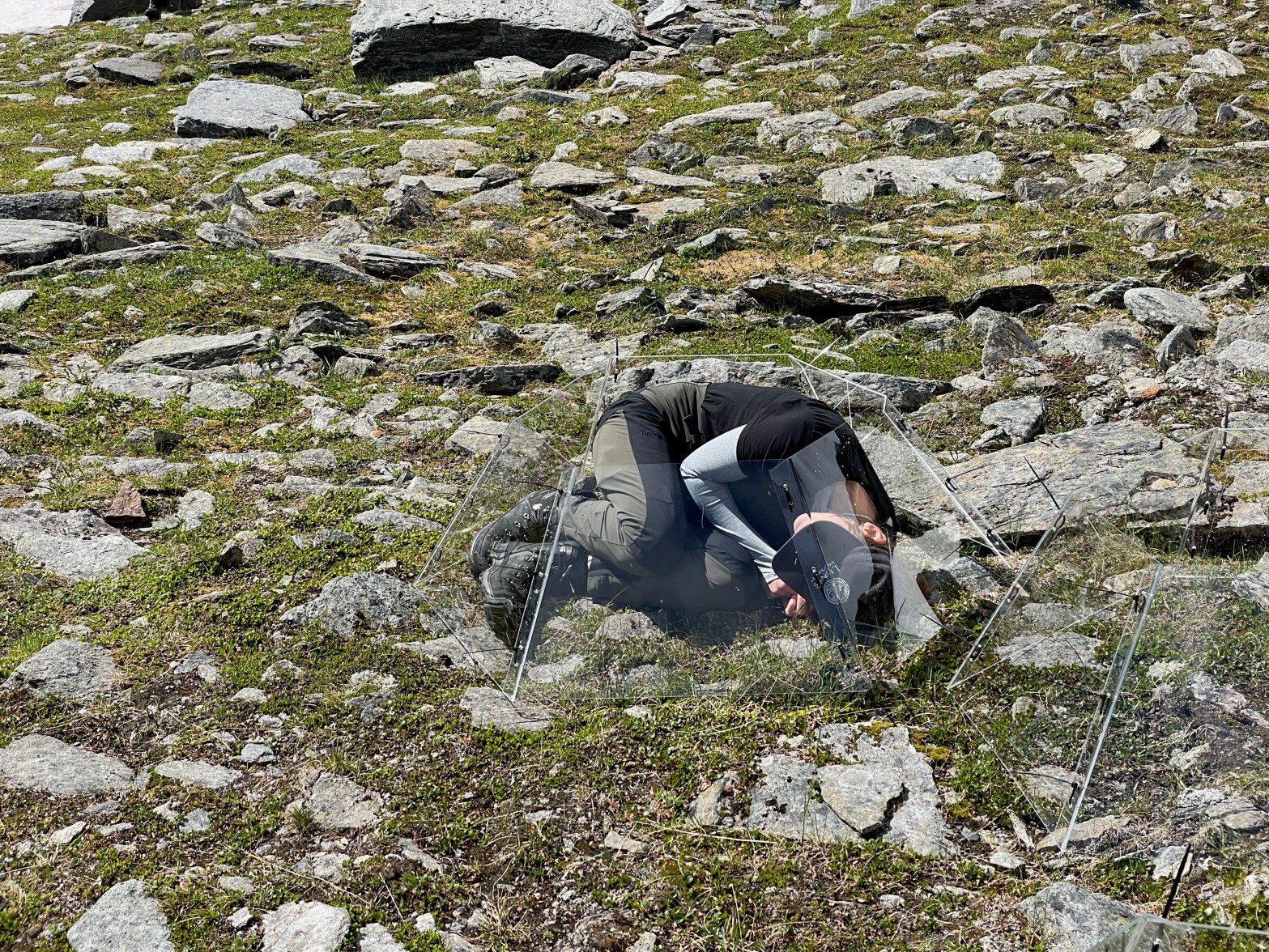
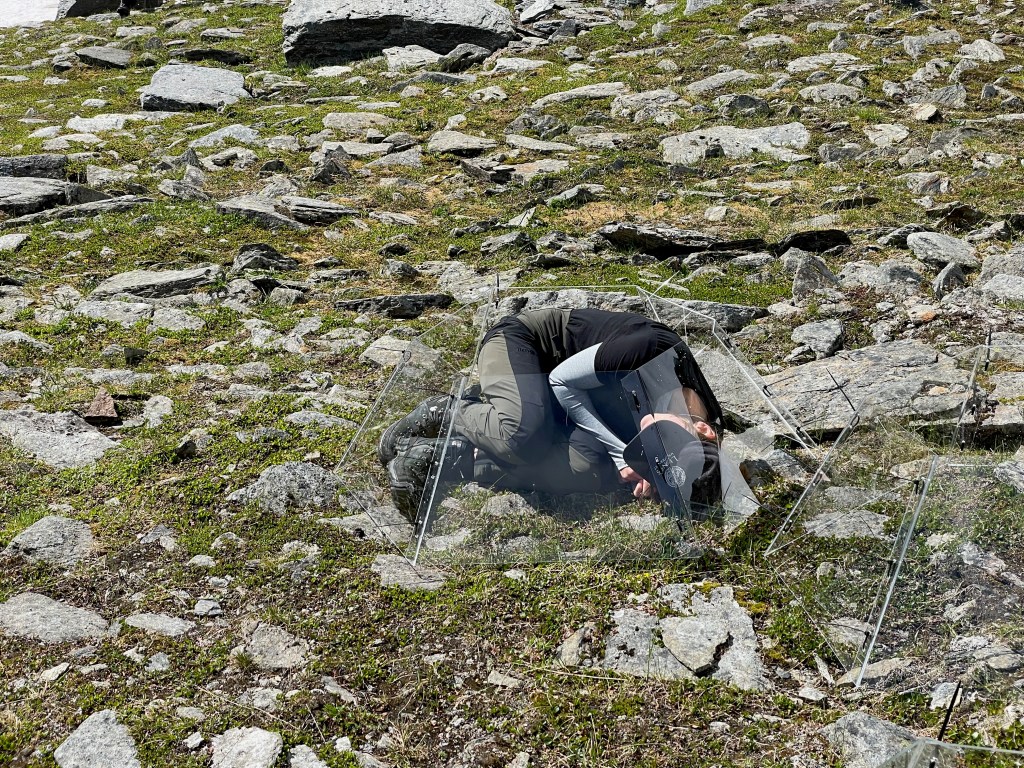
Fieldwork in the Arctic can be very cold. Why freeze if you can improvise and use OTC (open-top-chambers) for a cozy and warm powernap?
7. Write through rain: Pencils, waterproof notebooks, and… proper rain cover!
Rain or snow, data collection can’t wait. Pencils are your best friend—they won’t smudge or freeze like pens (or Sharpie pens). Pair them with a waterproof notebook and you’re set.
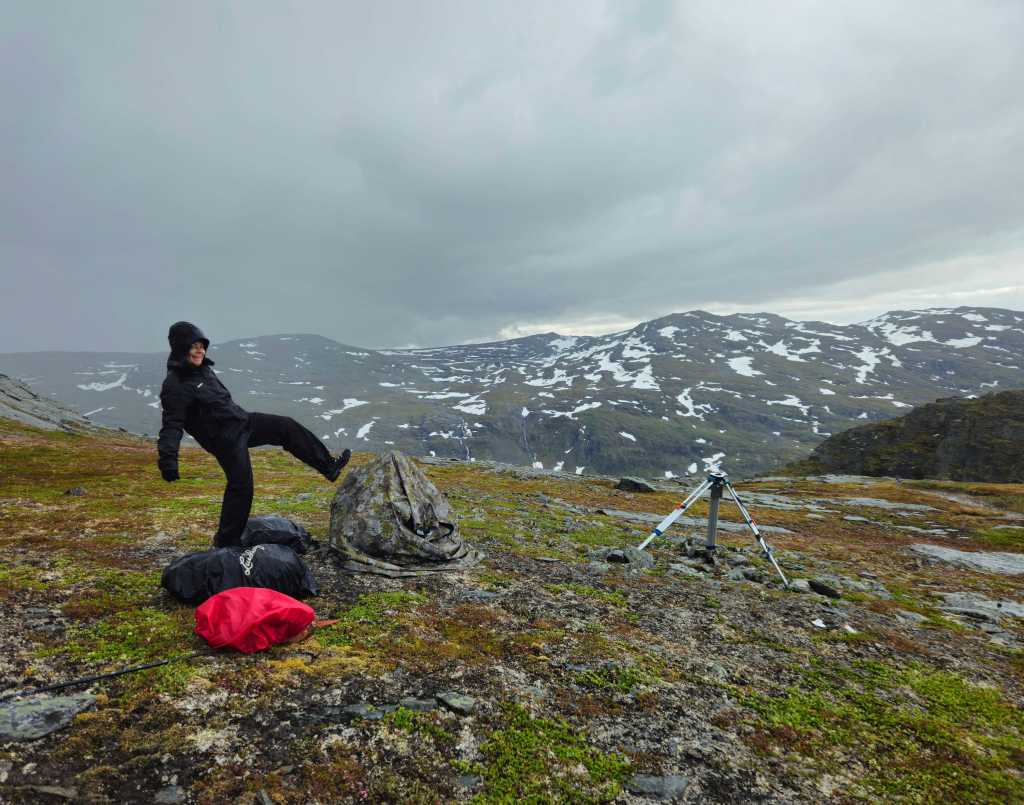
Large rain covers such as “Jervenduken” are extremely useful as you can use a computer under it – you can even hide from co-workers, they will never find you again. And don’t underestimate a roll of toilet paper stored inside a water-tight plastic bag; not just for its obvious uses, it’s handy for wiping condensation off instruments.
8. Backpack must-haves: Duct tape, zip ties & coin envelopes
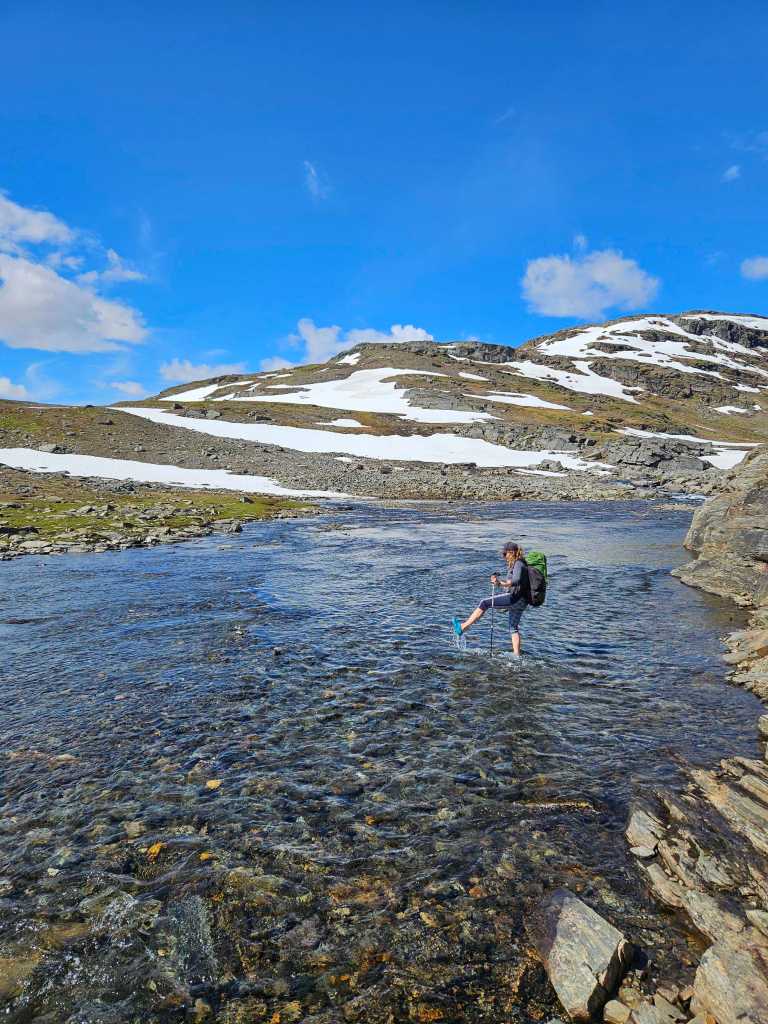
Maximize your pack’s utility without overloading it. Wrap duct tape around your Nalgene (water bottle) to save space while keeping it easily accessible for quick repairs. Zip ties are fantastic for field fixes, and coin envelopes are a lightweight way to collect and protect small specimens like seeds. Another extremely useful item: crocs. You can even cross rivers with them and keep your shoes dry.
Conclusion
Arctic fieldwork is as much about preparation as it is about endurance. With these hacks in your arsenal, you’ll stay more comfortable, better organized, and ready to face whatever the environment throws at you. Happy researching—and don’t forget the chocolate! Let us know, what are your life hacks for fieldwork in the Arctic?
 EDGE LAB